
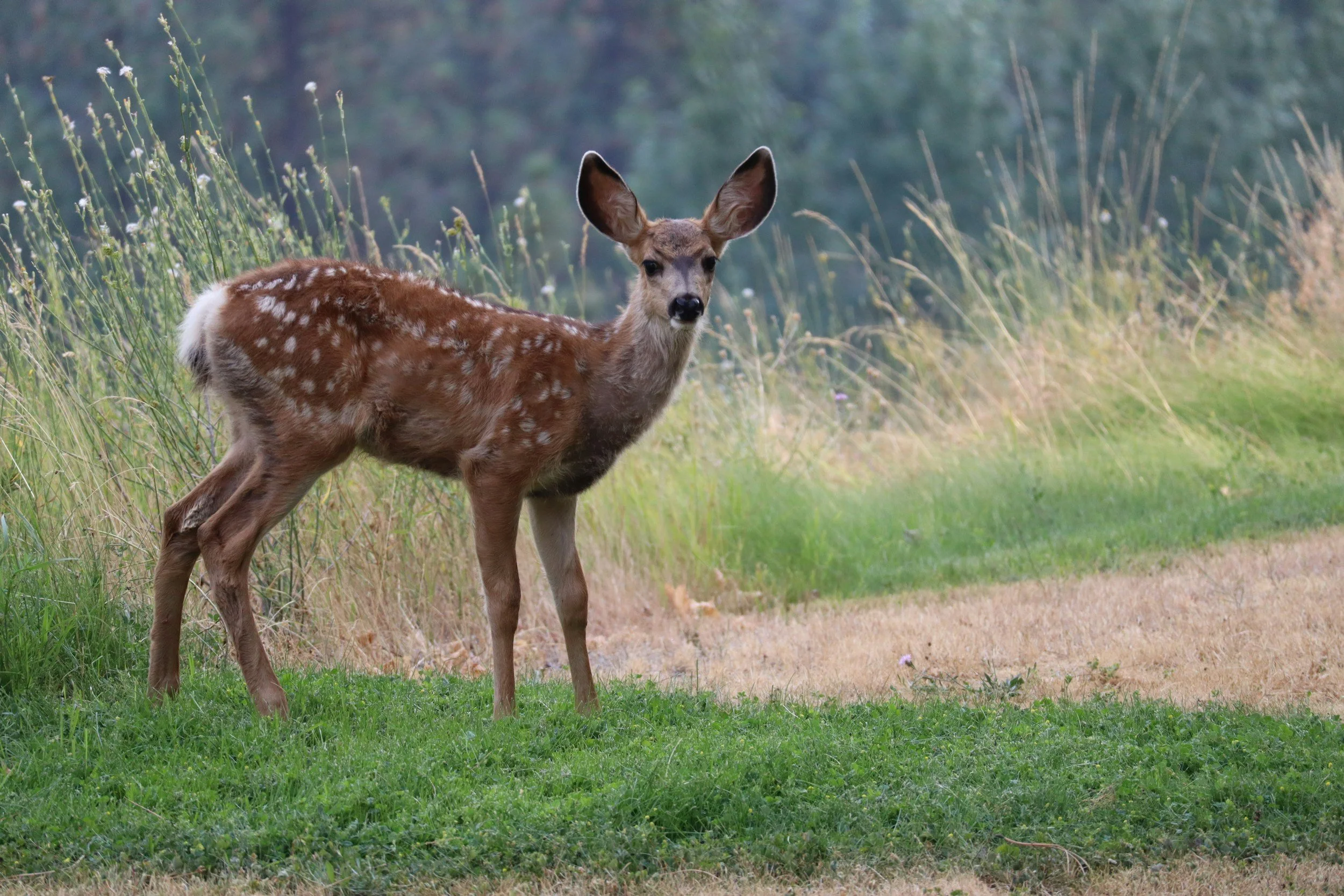
Deer in a grass field.
I moved to Northeast Pennsylvania about eight years ago. For the first several years, gardening wasn’t even on my radar. I was deep in home renovations and didn’t have the time or energy to focus on the landscape.
By year five, I was finally ready to start gardening… and I was completely unprepared for how challenging it would be.
The soil was packed with rock and heavy clay. Many areas were severely compacted. My property was surrounded by massive oak, pine, and maple trees, creating dense shade throughout the landscape.
And then there was one enormous problem…
THE DEER. 🦌
Coming from Central New Jersey, I had been spoiled. I was used to full sun, beautiful sandy loam soil, and—believe it or not—no deer at all where I lived near the beach.
That illusion was shattered quickly.
I had no idea how overpopulated deer are in Northeast Pennsylvania. I would plant something one day, only to come outside the next morning and find everything completely gone. The deer had eaten every single plant.
I was frustrated. I was discouraged. But I was also determined.
So I began my mission:
👉 Find plants deer won’t eat or at least figure out how to make them leave my garden alone.
Over the next few years, I studied deer closely and learned a lot about their behavior.
What I Learned About Deer (The Hard Way)
1. “Deer Resistant” Does NOT Mean “Deer Proof”
Plants labeled deer resistant are not immune to browsing.
Deer will often eat the new growth in the center of plants because it contains higher nitrogen levels.
Young foliage is far more appealing to deer than mature leaves.
2. Deer Will Eat Poisonous Plants (Yes, Really)
While deer usually avoid toxic plants, they will still nibble them in small quantities.
Their digestive systems can tolerate and process some poisonous plants.
Plants that would seriously harm humans or pets often don’t affect deer at all.
Shocking? Absolutely.
3. Sometimes They Eat the Leaves of Deer resistant plants—but Not the Flowers
I noticed that deer will sometimes:
Eat the foliage of “Deer resistant” plants for moisture and nutrients
But will leave the blooms untouched
This happens frequently with Lupines and Irises in my garden.
4. Plant Labels Can Be Very Misleading
Just because a nursery label says deer resistant does not mean it truly is. Perfect examples are Heuchera and Astilbe. These two plants are not even remotely close to being Deer resistant at least not here in Northeast Pennsylvania.
(I’d really love to know where some nurseries get this information.)
5. Deer Change Their Diet as Seasons Shift
Deer instinctively know when fall and winter are approaching.
In Northeast Pennsylvania, they begin eating plants they normally avoid
This often starts in early to mid-August
6. Deer Behavior Varies by Geographic Location
A plant that deer ignore in one region may be devoured in another.
For example:
Deer avoid daffodils and foxglove in Northeast Pennsylvania
But in parts of Texas and other regions, they may eat them without hesitation
Both plants are poisonous—yet deer still may consume them depending on location.
7. Deer Are opportunistic eaters not necessarily starvation eaters
Even though the woods surrounding my property are full of lush weeds, deer always prefer my garden instead.
They go for the easiest, most nutrient-dense food available—your carefully planted landscape.
8. Winter Changes Everything
In winter, deer will eat ANYTHING.
Evergreen plants, shrubs, and trees are especially vulnerable
If it doesn’t lose its foliage, it must be protected
I’ve seen deer eat things I never thought possible—including raw chicken and egg yolks.
Yes. Really.
Although deer are herbivores, their multi-chambered stomachs can adapt. When protein levels drop in winter, they will consume meat to survive.
The first time I witnessed this, I was absolutely floored.
9. Repellents do help
Sprays using:
Peppermint oil/Lavender oil
Cayenne pepper
10. Fencing Is Harder Than You Think
Deer can easily jump 6–8 feet
Thin plastic or fabric fencing around your flower beds does not work—deer will chew right through it
I’ve even read reports that deer can jump up to 30 feet when fleeing predators.
11. Feeding Deer Makes the Problem Worse
Feeding deer is incredibly harmful to the ecosystem.
When you feed deer:
You increase survival rates
Population numbers explode
Over browsing destroys forest floors and gardens
This leads to:
Loss of native seedlings and wildflowers
Reduced tree regeneration
Increased invasive species (like Barberry)
Less habitat for birds, insects, and small mammals
In Northeast Pennsylvania, Deer overpopulation has directly contributed to the spread of Barberry—and now they’re even eating that.
I’ve watched it happen with my own eyes.
Please—do not feed Deer!
I have added a chart below to show the levels of Deer Populations in the top 10 states…

The Top 10 U.S. States by Deer Population
“As shown in the chart above, deer populations are not just increasing—they are concentrated heavily in certain states. Texas alone supports over 5 million deer, while many Midwestern and Northeastern states each have more than one million animals. This level of population density explains why deer browsing has become such a persistent problem for gardeners and homeowners.”
How to Make Deer Stop Eating Your Plants
I refuse to permanently fence my flower beds. What’s the point of planting something beautiful just to hide it?
Nothing will protect your garden 100%, but these methods dramatically reduce browsing—without surrounding your beds in ugly fencing (at least until winter).
Winter protection is essential in areas with heavy deer populations and few natural predators.
Here’s what does work:
1. Choose Highly Deer-Resistant Plants
Yes, your plant choices are more limited—but the reduced frustration is worth it.
👉 I regularly test plants and share results on my YouTube channel, Facebook, Instagram and TikTok - The Garden Whisperer including follow-ups to see which ones truly hold up.
2. Use Poisonous Plants (Where Appropriate)
Some toxic plants are effective deterrents in certain regions. Find one’s that work in your area. For Northeast Pennsylvania Daffodils and Foxglove are highly Deer resistant. I have never seen them eat either.
⚠️ Important:
Be cautious if you have children or pets as poisonous plants can harm and even possibly kill them
Safety always comes first—we want beautiful gardens, not emergency room visits
3. Apply Homemade Repellent Sprays
Peppermint oil/Lavender oil and cayenne pepper sprays:
Are inexpensive
Can be very effective when reapplied regularly do help, but they are not foolproof. Reapplication is necessary after it rains
Deer can adapt to scents over time
It’s best to rotate repellents and occasionally use alternatives like lavender oil in place of the Peppermint oil
Store bought deer repellants are expensive making your own is cheaper
👉 Check out my YouTube video where I show exactly how to make this mixture: https://youtu.be/s6nADB1Asr0
5. Try Fencing or Wireless Deer Fencing
These systems:
If you plan to fence your entire yard:
Effective deer fencing should be at least 12 feet tall and ideally include an angled top to prevent and discourage jumping.
Wireless Deer Fencing:
Are surprisingly effective
Are more expensive upfront
Work best when multiple units are used in high-pressure areas
👉 You can purchase the Wireless Deer Fencing and receive a free years’ worth of scent strips by clicking on this link and adding the Extra Scent Strip Pack to your cart. The code KELLY should apply automatically https://wireless-deer-fence.myshopify.com/KELLY
6. Protect Evergreens (doesn’t lose their foliage in the winter) in Winter
In early to mid-fall:
Cover all evergreen plants, shrubs, and trees
Use sturdy wire cages for protection
Leave them covered throughout winter
👉 You can purchase quality metal Deer fencing/cages at gardeners.com
Use my discount code at checkout to save on your purchase…
Once you identify plants, trees, or shrubs that deer consistently avoid, repeat them throughout your landscape.
Also use these highly deer-resistant plants strategically as natural barriers to help shield less resistant plantings.
Final Thoughts
Deer pressure is real and it can be incredibly frustrating. But with the right strategies in place, it is possible to garden successfully, even in areas with heavy deer populations. Success comes down to observation, flexibility, and persistence.
If you’re tired of deer destroying your hard work and want real-world, tested solutions, I invite you to follow my YouTube, Facebook, Instagram and TikTok channels…The Garden Whisperer, where I share deer-resistant plant trials, garden updates, and honest follow-ups on what actually works (and what doesn’t).
🌿 The Garden Whisperer can also help you create a personalized, beautiful, deer-smart landscape from plant selection and layout to long-term success.
Just contact us to get started.
Looking for a pre-planned ready-to-use garden plan? Be sure to check out my Deer-Resistant Garden Design Video Digital Download. Now, you’ll have finally have asimple and effective way to start planning a garden you’ll actually get to enjoy.